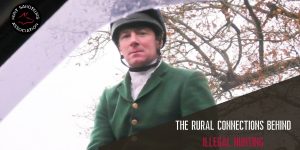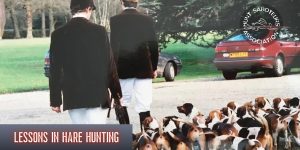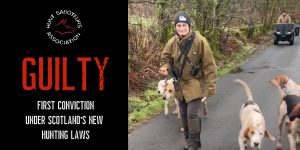



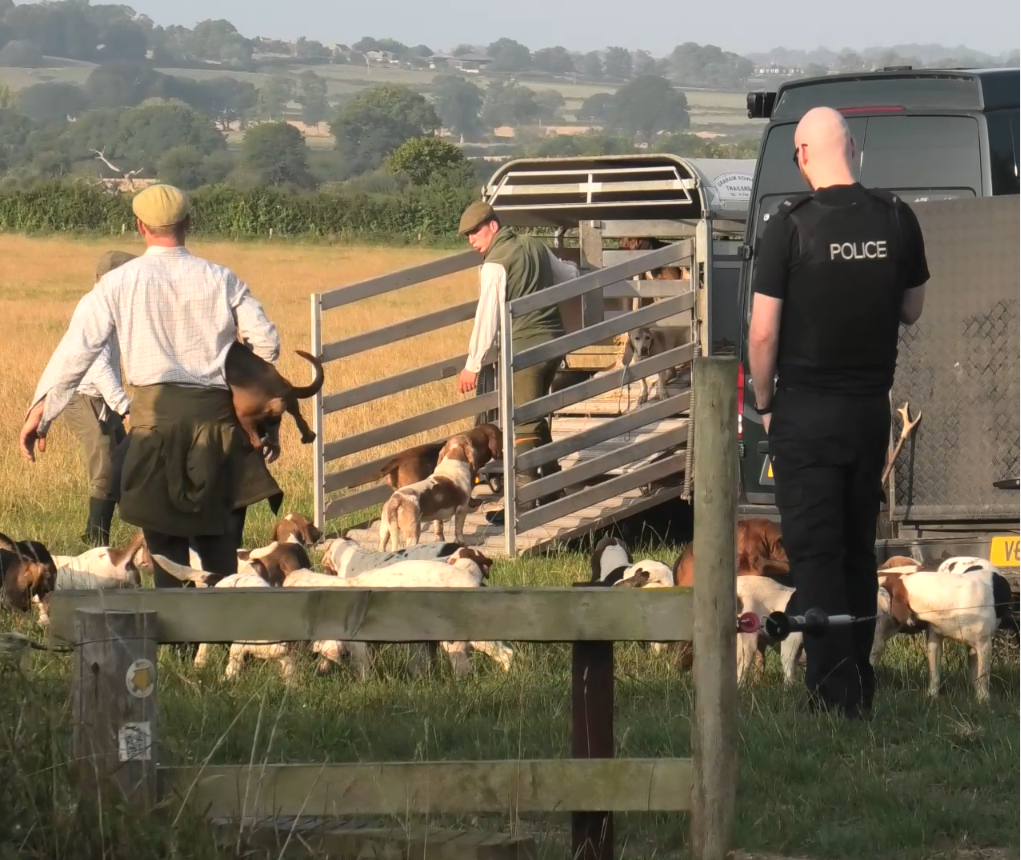
Charlie Ford, huntsman of the Devon & Somerset Bassets, was found guilty of a Hunting Act offence at Weymouth Magistrates’ Court on Thursday 18 June 2026.
This is the first time a basset pack has been convicted under the Hunting Act.
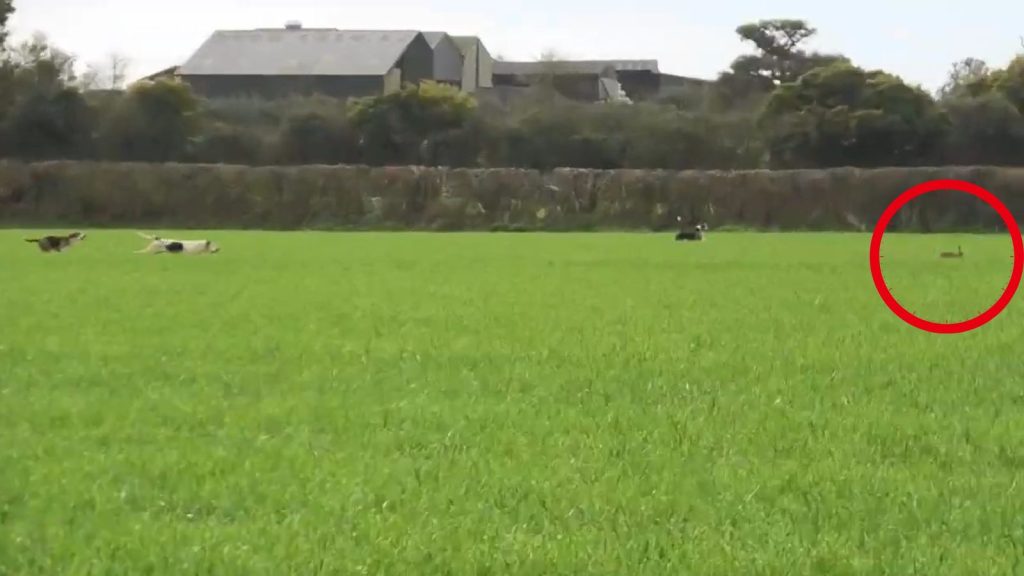
The offence occurred on the 13th of October 2024 at Mullins Farm in Bagber. North Dorset Hunt Sabs received a tip-off that a hunt was in progress and attended with Wildlife Crime Action monitors. The sab filmed the basset pack hunting a hare, with footage being supplied to the police. Ford was fined just £648 and ordered to pay a victim surcharge of £259 and court costs of £650.
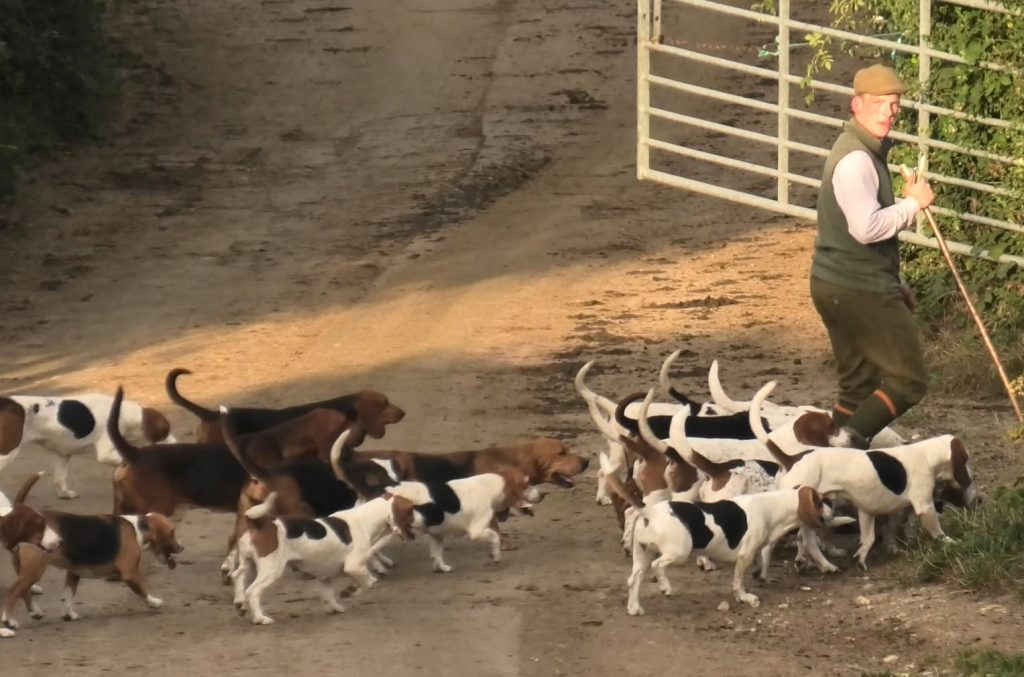
The Rabbit Exemption – Another Smokescreen
In his police interview, Ford claimed he was hunting hedgerows for rabbits – which is legal under the Hunting Act- and a common ruse employed by foot packs. However, sab
footage clearly showed hounds being cast over the middle of open fields.
Prosecution expert witness Stewart Scoll confirmed that rabbits would be “highly unlikely” to be in the middle of an open field during the daytime and would only be 15 to 20 yards from hedgerow burrows, which they would enter at the first sign of danger. This is in direct contrast to hares who occupy a “form” – a shallow depression in the centre of a field – and rely on camouflage and speed to escape.
The defence further tried to claim they were hunting rabbits with myxomatosis, which they suggested might affect their normal behaviour so they would be in the middle of the field. However, the expert stated that rabbits with the disease would be even closer to their burrows than healthy rabbits because of the effect the disease has on their eyesight.
Horn Calls
In desperation, the defence also tried to claim that basset packs employ ‘special’ horn
calls. Continuous footage presented in court, first showed the hounds casting for scent in the centre of an open field as the sab approached and attempted to distract them. A
couple of deer are then seen, and the huntsman immediately begins voice calls to gather
the hounds and then rates them away with harsh calls of “no” and “bike” (back) along with a short blast of the horn. The hounds then return to him and are taken into the next field.
Hounds are cast again and the huntsman begins running across the field or “fleeing the
scene” as he himself put it during questioning! Predictably, the hounds come across a hare and go into full cry pursuing the terrified animal across the field and through a hedge. In contrast to the deer incident, there is no attempt by the huntsman to stop them and once they are though the hedge, Ford makes three short horn blows, which the expert witness stated were standard hunting calls to encourage hounds to hunt on.
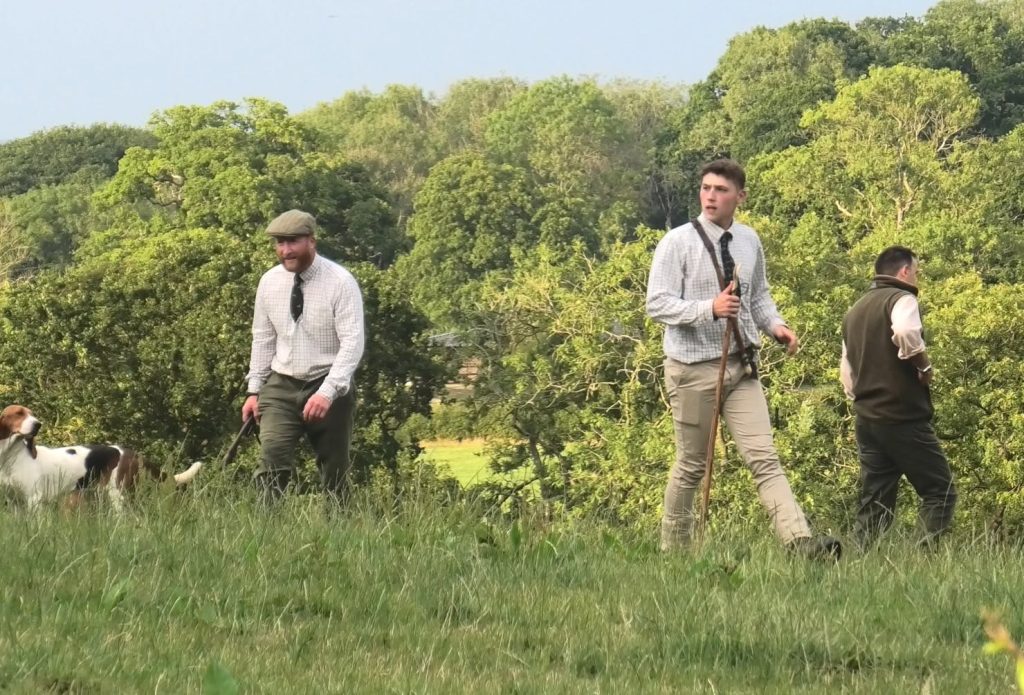
The expert witness described the different types of hunting calls, which are standard for all types of hunting with hounds, and said that the three rapid blows of the horn sounded during the hare chase was to encourage hounds as opposed to the long horn calls that would be used to stop and gather hounds, or the single sharp blow demonstrated earlier in the footage to lift the hounds heads and get their attention away from the deer.
The defence tried to claim that the horn calls used for basset hounds were different to
ones used in other forms of hunting, however the huntsman himself had already stated in interview that he used standard hunting horn calls.
The fate of the hare is unknown.
An HSA spokesperson commented,
“Congratulations to North Dorset Hunt Sabs on securing the first ever Hunting Act
conviction of a basset pack. This victory comes despite flagrant attempts by the hunters to
derail the prosecution by invoking the rabbiting exemption, adding in myxomatosis and – a new one on us – inventing mysterious new horn calls. This cynical approach shows exactly why reform of the Hunting Act must extend well beyond a mere ban on trail hunting!”
North Dorset Hunt Sabs operate in one of the most hunt-heavy parts of the country – they deserve your support. Please support them here: PayPal.Me