



The Decline of the Hunt Uniform
The HSA’s fashion correspondent reports.
In the Deeply Conservative World of Hunting, What You Wear Matters. the Traditional Dress Code Is Highly Fetishized, with Hunters Agonising over the Correct Number and Position of Buttons That Should Adorn the Hunt Coat. Having a Ribbon on the Back of Your Hunting Cap Is a Serious Offence That Could Get You Sent Home Unless You Are Master or Huntsman and Ladies Should on No Account Combine Jodhpurs with Ratcatcher. You Get the Picture.
But thanks to attention from hunt sabs, many packs are abandoning their traditional garb.
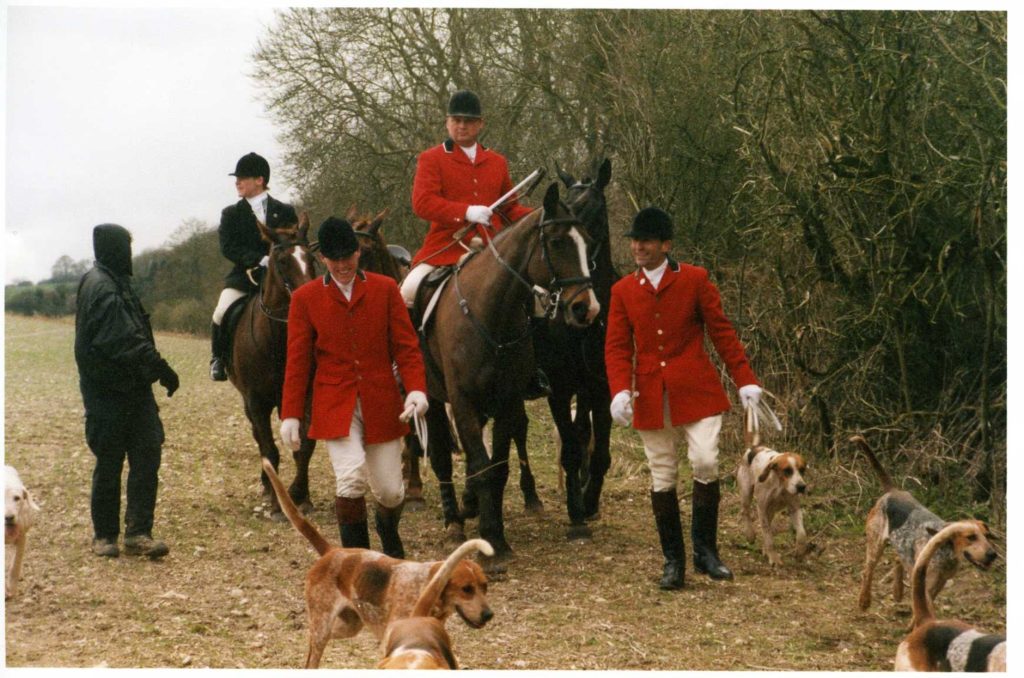
In the last few years, the stag hunting packs of the southwest have had to contend with sabs as never before. As well as the all-too-predictable violence, some stag hunters have taken to ditching their red coats as soon as the ceremonials of the meet are over. While it is a mixed picture – the Devon & Somerset Staghounds are keener to retain their uniform than the Quantocks Staghounds – these packs like to be as inconspicuous as possible when hunting, killing and ritually dismembering their victims.

The iconic red coat of fox hunting was supposedly introduced in the 19 th century when the Duke of Wellington’s officers started attending hunts in their scarlet regimental jackets. The red coat also caught on because it had the practical advantage of being easily spotted in the winter landscape. These days, of course, such visibility is the last thing a fox hunter wants! That red coat helps sabs locate the pack, it aids identification of hunt staff, and its connotations of blood and aggression ensure great optics for our side!

Post-ban, the fell packs of Cumbria were amongst the first to abandon the red coat, recognising that it was too much of a giveaway when striding across the open fell. As well as sabs, the fell packs have to contend with large numbers of tourists, and their simple ruse can be surprisingly effective.
The Nottinghamshire-based Grove & Rufford Hunt abandoned their red coats following their conviction for illegal hunting in 2017; their near neighbours the Barlow Hunt did the same a couple of years later when a particularly stomach-churning kill was caught on camera by Sheffield Hunt Sabs.
By no means every lowland pack has abandoned the red coat but many – particularly those who regularly see sabs – have calculated that it is a part of their tradition worth dropping.

With a few exceptions, beaglers traditionally wear a green jacket, white breeches, and a cap, while basset packs favour a jacket of blue or brown. Those breeches in particular have been an incalculable benefit to sabs – they stand out for miles against winter plough!
In the hierarchical world of hunting, the hare hunters are always subservient to the fox hunters – even in the design of their uniforms. The distinctive Padua red collar of the Westerby Bassets’ brown jacket is worn in deference to the Pytchley Foxhounds, while the gold collar of the Old Berkeley Beagles is a nod to the long-gone fox hunt of the same name.
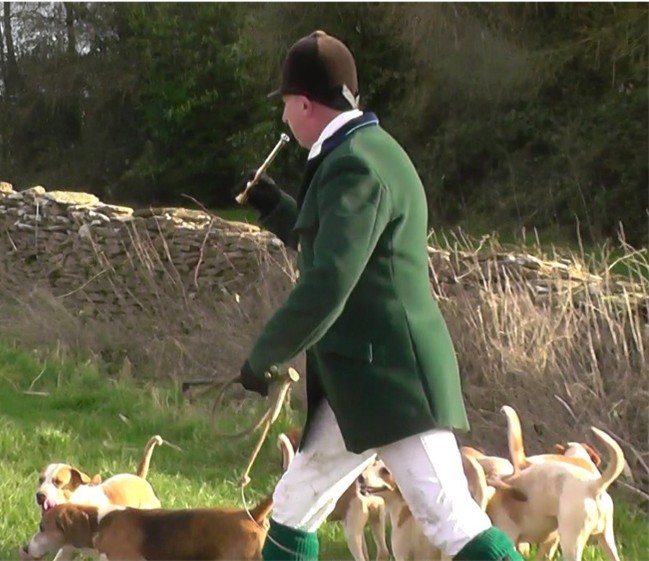
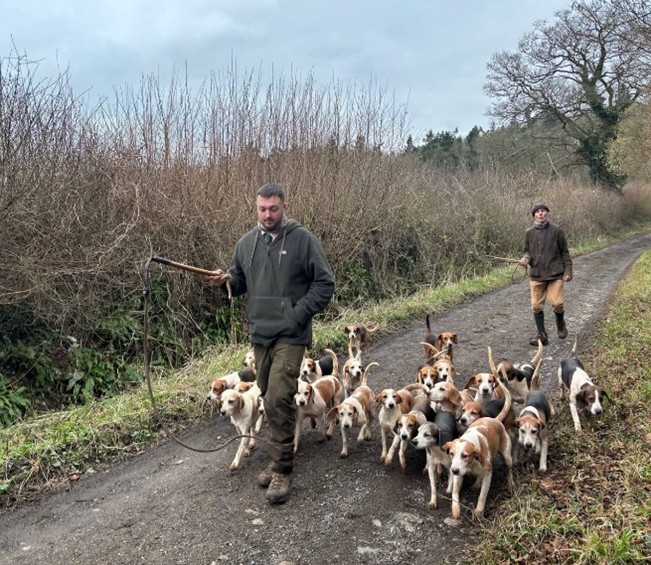
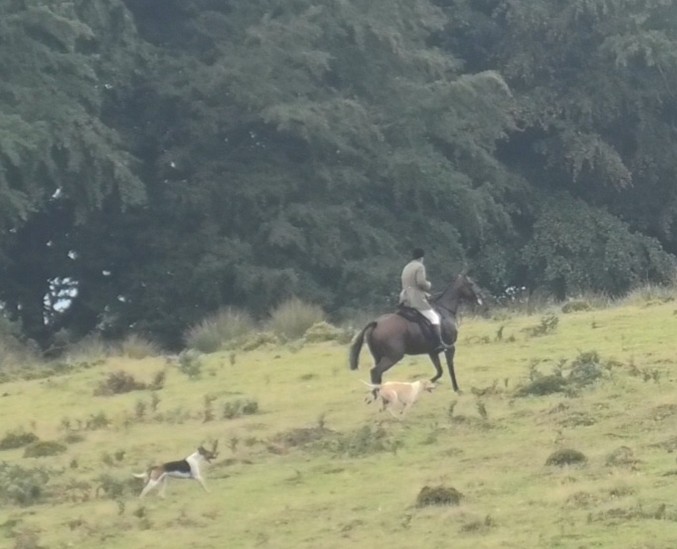
But it is increasingly the norm for beaglers to ditch these uniforms in an effort to keep a low profile. The Severn Vale, Trinity Foot & South Herts, RAC and Sandhurst & Aldershot Beagles, for example, all now turn out in nondescript outdoor wear in a desperate – if unsuccessful – attempt to avoid sabs.
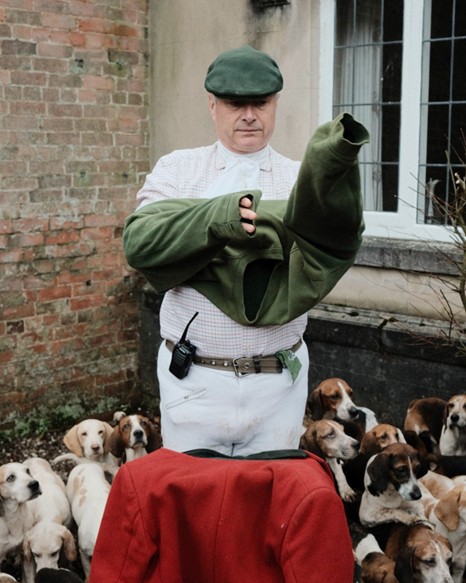
Other packs are reluctant to go quite so far. The Derbyshire, Nottinghamshire & Staffordshire Beagles are one of a handful whose huntsman traditionally wears red. However, in a Horse and Hound article, they announced a reversion to green or even camo as their scarlet coat was “starting to attract unwelcome attention”. In 2022, sabs witnessed an interesting sartorial ritual at their New Year’s Day meet: the huntsman hosted the formal gathering in his red coat before changing into a faded green sweatshirt for the actual hunt.
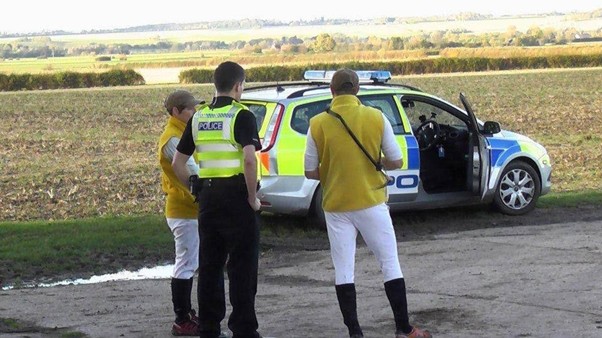
Others have tried a different approach. The now defunct Albany & West Lodge Bassets sported a daringly modern yellow gilet and baseball cap combination. Yes, it was very conspicuous, but it also looked nothing like traditional hunting garb. Presumably, they hoped to fool the casual observer into thinking they’re just doing that fun new sport called ‘trail hunting.’
Otter hunts – such as the Border Counties, Courtenay Tracy and Culmstock – kept their flamboyant uniforms when they supposedly switched to hunting mink in 1978. The new mink packs, run on a shoestring, tended to be much scruffier, though the Dove Vallely Mink Hounds used to make an effort by wearing a replica Staffordshire Otter Hounds uniform, even insisting that original SOH hunt buttons be worn on the cuffs and buttonhole of the jacket!
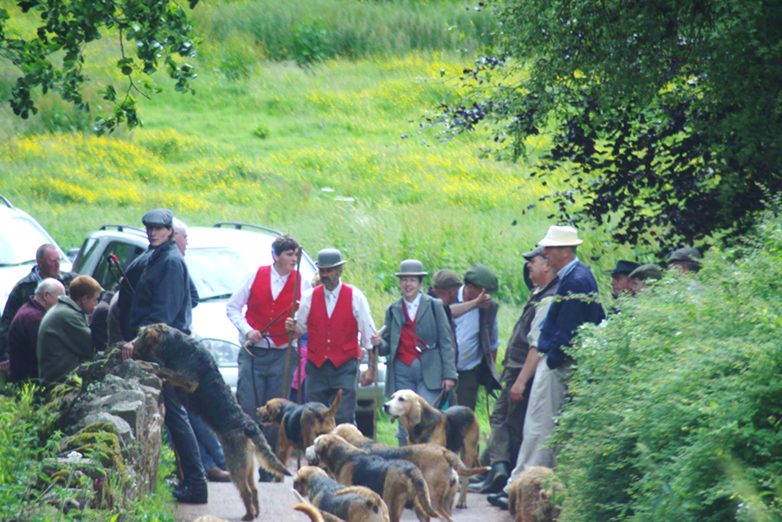
Indeed, when sabs hit the Culmstock in May 2014 no such pack had been touched in years…and it showed. The scene that greeted sabs on the River Yarty was like something from the Victorian era, with hunters attired in red jackets, white ties, and grey bowler hats. Fast-forward through a decade of sab attention and things couldn’t be more different on the riverbank. The Culmstock are reduced to a sleazy-looking rabble, while both the Border Counties and Dove Valley have embraced the popular but mundane gilet or waistcoat option. The Wealden Mink Hounds huntsman was apparently the worst offender, committing the ultimate sin of turning up at joint meets in his jeans.

But no article about hunt uniforms is complete without a reference to that British fashion icon, Mr. Paul Smith. No, not that one…the huntsman of the now defunct Eastern Counties Mink Hounds. Paul’s visionary pairing of traditional otter hunt tailoring with contemporary gold earrings and tattoos has won him plaudits from across the fashion world.
Of course, in an important sense it doesn’t matter what the hunters wear – they’re still out there killing animals. But in another way, it really does tell us something: it is one of many symptoms of the slow but inexorable death of hunting. These arch-traditionalists don’t want to give up any aspect of their ‘birthright’, and the fact that they are doing so shows how much trouble they are in.
Whether it is the massive loss of hunting country, the dwindling content of hunting publications, the folding and amalgamation of packs, or just looking a bit of mess in the hunting field, it’s all going the same way.
However you look at it…hunting is a dying sport.