


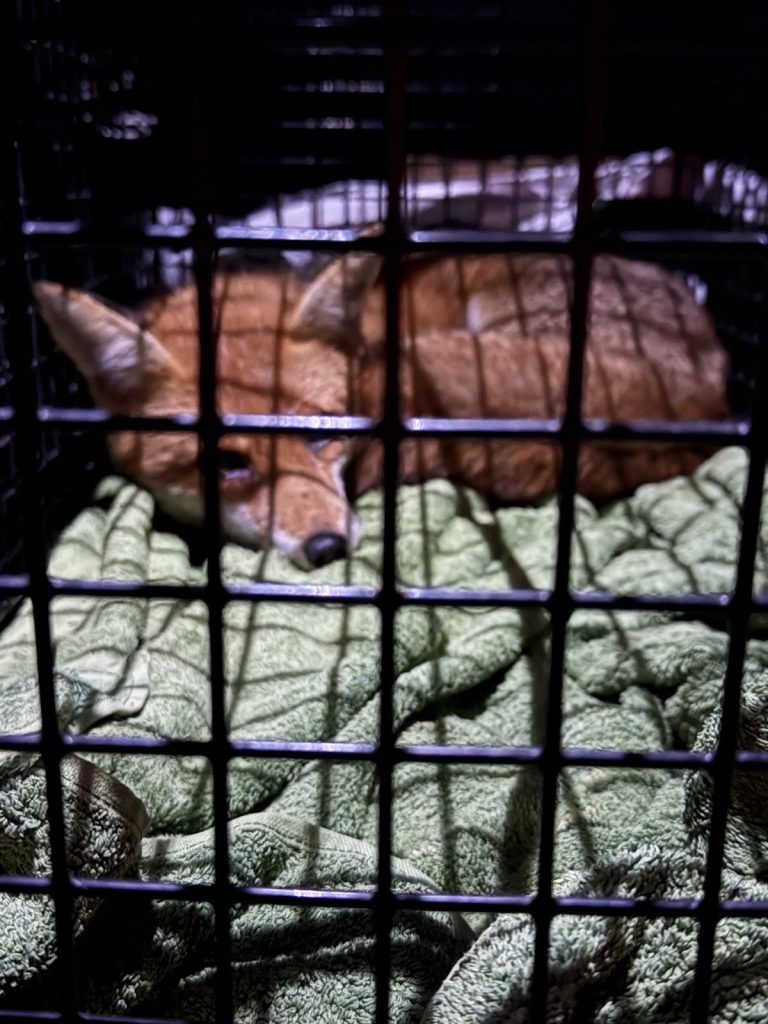
The recent rescue of a snared fox and caged corvid from a Larsen trap on a Wiltshire shooting estate, once again highlights the way in which wealthy interests are often prioritised over Britain’s already fragile biodiversity.
The shooting industry often associated with wealthy landowners, the aristocracy and royalty (sometimes the plebs are allowed to join in) continues to destroy our countryside and the wildlife that lives here, participants are often helicoptered in, to enjoy blasting lead shot into the bodies of birds which are flushed from their cover by beaters and towards the path of guns held shakily aloft by tweeded hooray-henry’s. It takes about as much skill as a group of toddlers let loose with crayons on a wall. As an industry they continue to decimate wildlife around the release pens.
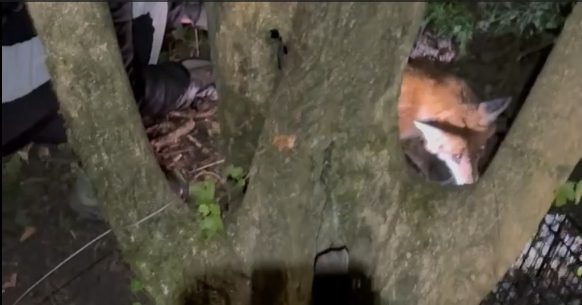
Wiltshire Hunt Saboteurs recently released footage of an ensnared fox, on such an estate, and the animals subsequent rescue. A further search of the same estate found Larsen traps amongst many other “control” measures used against British Wildlife. Shoot towers, spring traps and even “stink pits”—used to lure animals such as foxes into position for shooting—were in use here.
What makes this case particularly striking—though not necessarily unusual—is the ownership structure of the estate. It is alleged to be owned by a wealthy Belgian family operating through a corporate structure registered in Luxembourg for tax purposes.
The Larsen Trap
Larsen traps use decoy (“call”) birds to lure other corvids. These decoys must, by law, be provided with adequate food, fresh water, a perch, and protection from the weather.
However, on the day of the rescue, temperatures reached 33°C. The trap contained no food or water, and the bird had inadequate protection, exposed in direct sunlight in an open field. The compartment was cramped, and the bird appeared visibly distressed.
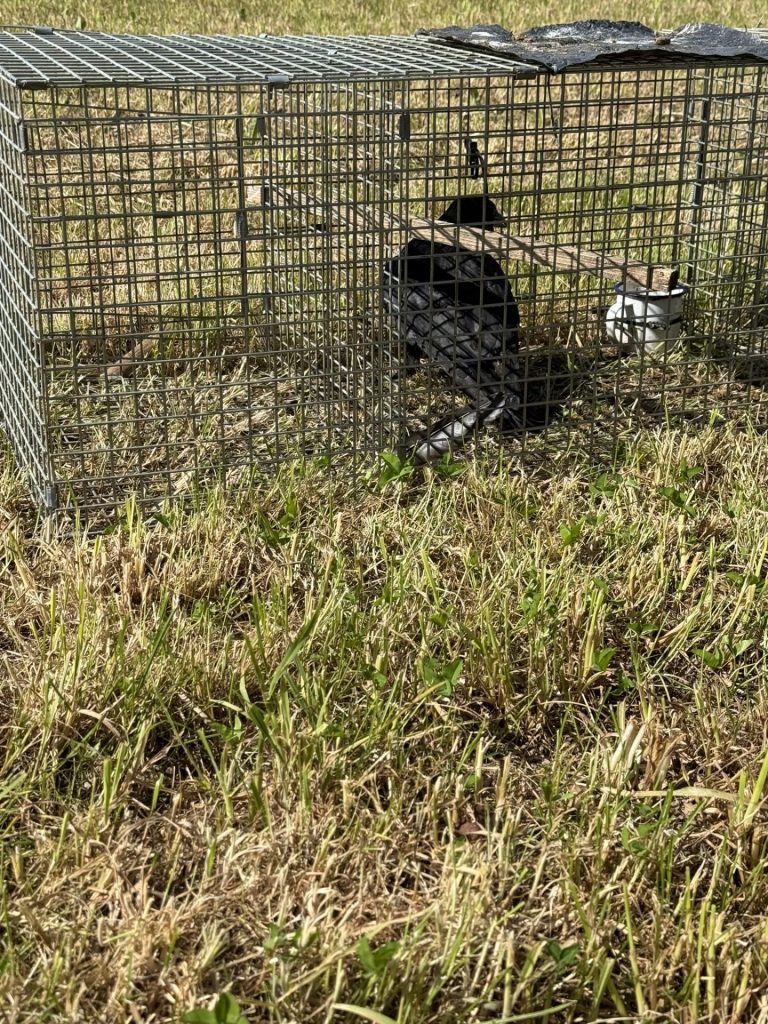
The purpose of the trap is to exploit the territorial nature of corvids. A decoy bird attracts others of its species, which land in an adjoining compartment where they are trapped and later killed whenever the gamekeeper returns.
Corvids—crows, ravens, rooks, magpies and jays—are among the most intelligent animals on Earth. They have repeatedly demonstrated cognitive abilities once believed to be unique to humans, and other highly intelligent animals, such as great apes, dolphins and elephants. Their remarkable intelligence has often been the subject of scientific research and one of the few non-human animals to manufacture and use tools to help them find food, and their capacity for problem solving, learning and cooperation is well documented.
The caged bird was found late May 2026, the nesting season for corvids is March through July. The capture of these adult birds in May therefore risking many orphaned fledglings that may not survive.
Although designed to catch corvids, these traps also capture non-target species. Birds of prey, in particular may be drawn in by food left for the decoy bird—sometimes accidentally, and sometimes intentionally. The news is littered with stories of gamekeepers caught clubbing buzzards or bludgeoning goshawks after trapping them in these types of traps.
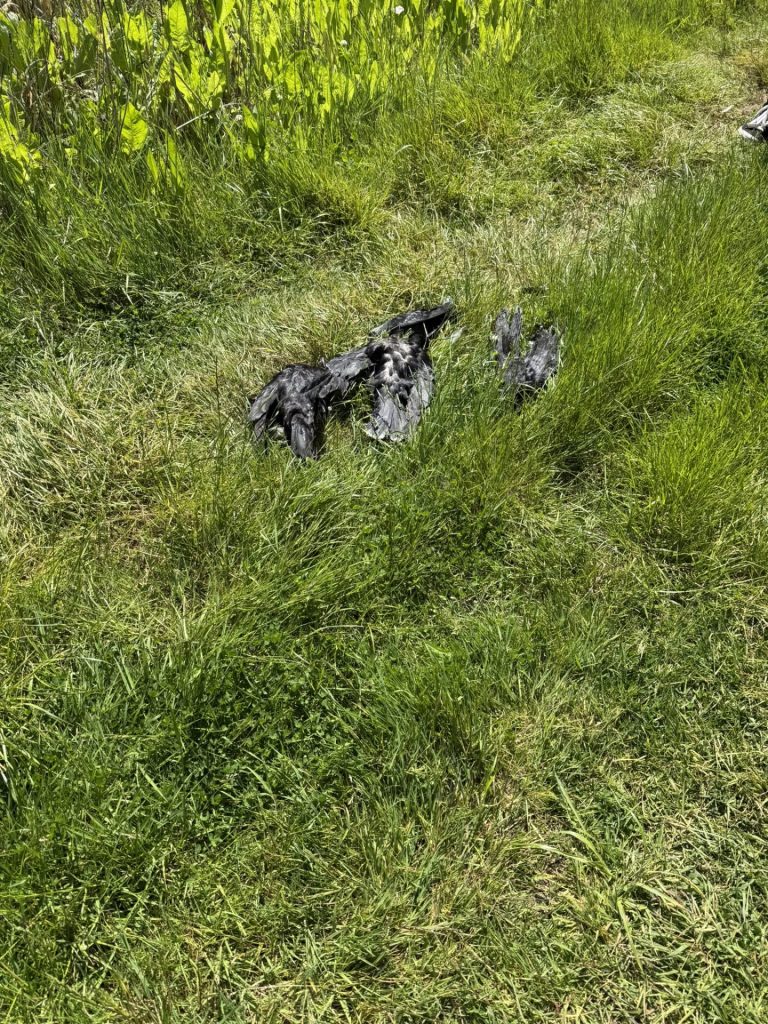
The distress experienced by the caged “call bird” cannot be overstated. In addition to the stress of prolonged confinement, these birds are frequently forced to witness the capture and killing of other birds trapped alongside them, significantly intensifying their fear and psychological trauma. On this estate, several dead corvids were reported to be found in so-called “stink pits” used to attract foxes for shooting. They were reported to have had their necks broken.
The Clam Trap
These traps—often called Larsen mate traps—are typically used alongside standard Larsen traps and are usually placed above them. They are the mechanism by which the target bird is caught.
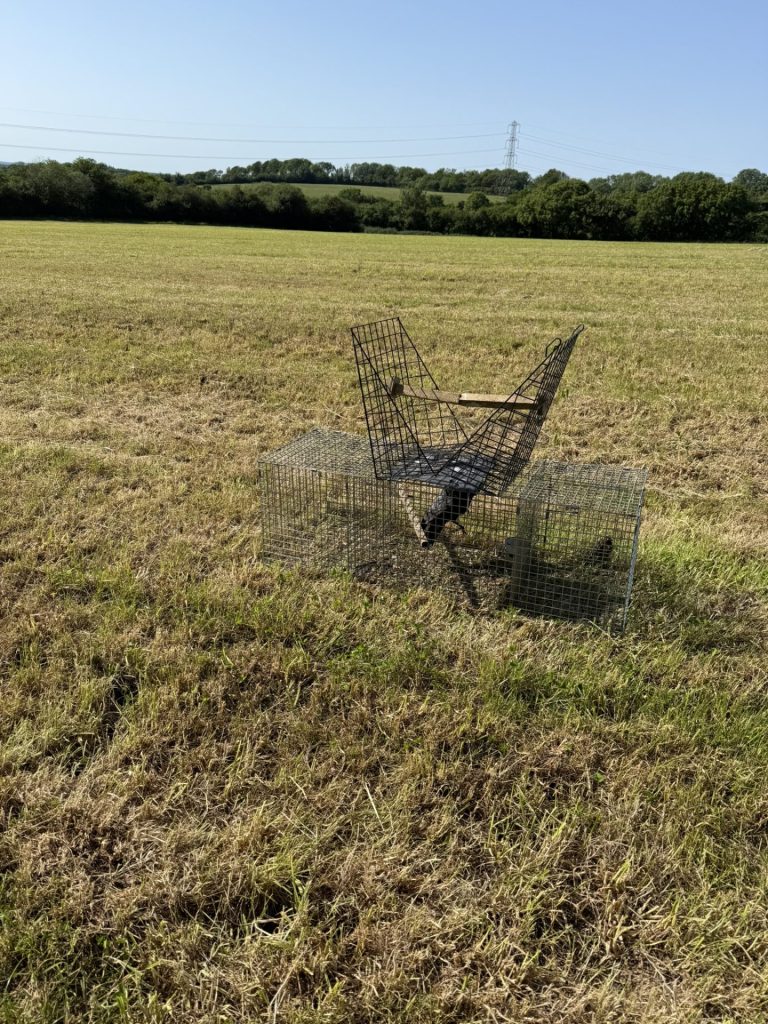
When a bird lands on the split perch, it triggers a spring-loaded mechanism. The “clam” snaps shut, trapping the bird inside. While described as “live-catch” traps, they can cause severe or even fatal injuries, especially if larger birds or even mammals are caught with their wings or limbs extended, by the speed and force of the trap as it closes.
Unlike the decoy bird, which is legally required to receive food, water, and shelter, the bird caught in the clam trap is afforded no such welfare protections. They may be left exposed to the elements—without food, water, or shelter—for up to 24 hours before inspection, assuming the gamekeeper fulfils his duty to check the traps every 24 hours, many do not.
This creates significant welfare concerns. In hot weather, animals may suffer extreme dehydration, heat stress, or death. Even under legal inspection intervals, a trapped bird can endure prolonged distress.
Why are these traps still legal?
Their use is authorised under the UK’s general licence system. However, as this case illustrates, their real-world use can fall far short of welfare requirements. In practice, they can cause significant suffering to both the decoy and the trapped bird. There is no requirement for regular inspections or paperwork to demonstrate that even the most basic welfare conditions are being met.
The conditions state “You should avoid setting your trap during periods of extreme hot or cold weather, or when such conditions are likely.” This was clearly not adhered to on this estate, and with extreme weather more recently, you can bet that the suffering of other birds in similar predicaments on shoots all around the UK would have suffered immensely in the recent heatwave which is set to return in July.
It is also illegal to set the trap in any position that is likely to cause injury to any wild bird coming into contact with it but by design that is precisely what these devices often do.
The Labour government’s 2025 Animal Welfare Strategy stated that it would review traps used to catch wildlife in England, including spring traps, mole traps, and live-capture traps such as Larsen traps.
Notably, Larsen traps are banned in their country of origin, Denmark, as well as in several European countries including France, Germany, and ironically given this estates ownership – they are also illegal in Belgium.
It is time for the UK to follow suit.
The Snare
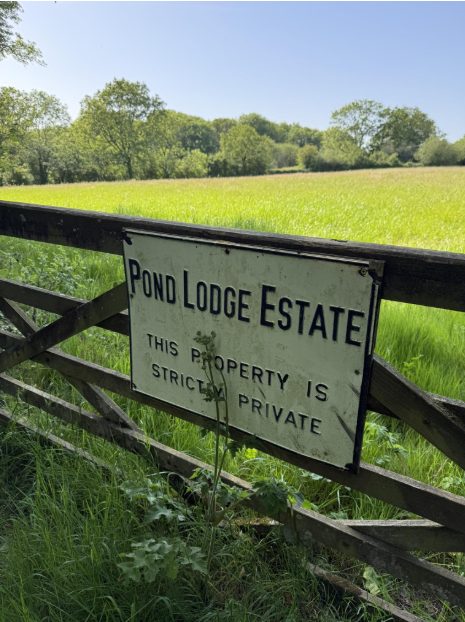
The fox had already been trapped for hours by the time a rescue team arrived on land understood to belong to the Pond Lodge Estate near Charlton, Malmesbury. Footage recorded by rescuers makes the animal’s suffering unmistakable: the fox is seen straining desperately against the snare, which is tightened around their neck.
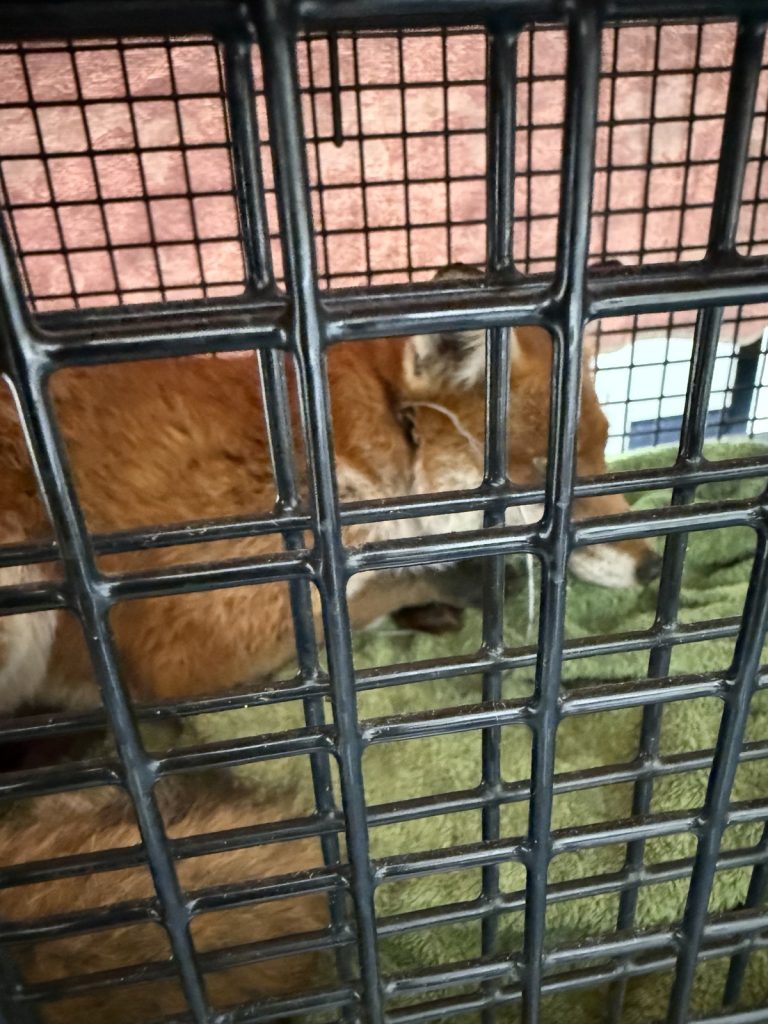
The wire had been secured to a tree trunk, with a ditch running to one side. The fox was confined within the ditch, approximately two feet from the anchor point. Each time the exhausted animal attempted to rest, they risked becoming partially suspended by the neck—this goes against even The British Association for Shooting and Conservation (BASC)’s code of best practice, “never set snares in such as way that the restrained animal could become fully or partially suspended, entangled, drowned or strangled”.
The UK Government has committed to a manifesto pledge to ban these contraptions, recognising the significant welfare concerns associated with their use. Snares have already been prohibited in Scotland and Wales, and self-locking snares were outlawed a few years ago, yet these types remain legal in England. In what can only be described as Orwellian double-speak the Countryside Alliance refers to snares as “humane cable restraints” and Tim Bonner, its chief executive naturally is in favour of stringing foxes by the neck.
Snares do not discriminate between species. Alongside foxes, badgers, hares, deer, domestic dogs and other wild animals have all been found caught in them. Cases of illegal or negligent use are well documented as once again demonstrated here, but even when snares are set in accordance with current regulations, welfare concerns remain. Animals can remain trapped for many hours, experiencing fear, exhaustion, dehydration and injury as they struggle to escape.
The suffering caused by these wire killers is unacceptable—all to maximise the number of non-native gamebirds, particularly pheasants, released for recreational shooting, despite ecological impacts of these mass releases, on local flora and fauna.
A Hunt Saboteur spokesperson said,
“It is high time the Government made good on its manifesto commitment and banned not only these vile snares outright, but also the hideously cruel Larsen traps that cause immense suffering to both the captive call birds and the birds they are used to catch.
But this is just the tip of the iceberg on many shooting estates, where wildlife that may prey on gamebird poults is routinely trapped and killed to maximise the number of birds available for shooting each autumn. Hunt Sabs regularly document the use of Larsen traps alongside spring traps, poisons and other predator control methods. All of this is done to protect gamebirds bred and released for sport—many of which will themselves ultimately be shot, with thousands ending up discarded in stink pits or other waste disposal sites each year.”